
سلة التسوق

العربية

Everything you need to know about paints and their manufacture

بواسطة Nada Shaban 07/أغسطس/2023 4

Everything you need to know about paints and their manufacture

[caption id="attachment_30755" align="aligncenter" width="340"]Everything you need to know about paints and their manufacture Everything you need to know about paints and their manufacture[/caption]
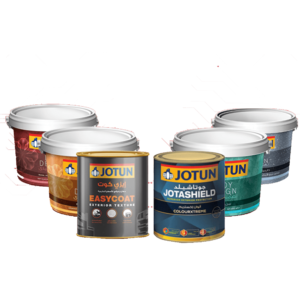
The history of the paint industry dates back to ancient times, when ancient people used natural materials to add color to the walls of dwellings and buildings. Learn everything you need to know about paints and their industry. With the advancement of technology and the development of chemical sciences, the paint industry has witnessed tremendous transformations, becoming a modern specialized field that combines art, engineering, and protection.

[caption id="attachment_47992" align="aligncenter" width="385"]Everything you need to know about paints and their manufacture Everything you need to know about paints and their manufacture[/caption]
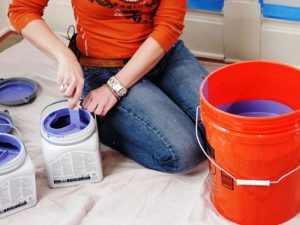

Paints are a mixture of insoluble substances suspended in a liquid medium, whether this liquid medium consists of a rich oil or a water-based emulsion. The liquid medium consists of a variety of substances, both organic and inorganic. Paint is characterized by the formation of a cohesive layer, known as a “film”, when it is exposed to air and undergoes reactions such as polymerization, oxidation or drying. This film has effective adhesion to the surface to be painted.

Paints are generally classified into one of two main categories:

  1. Suspension oil paints: The liquid medium in them consists of heavy oil and is unsaturated in some of its bonds. This type of paint is used on various surfaces.
  2. Water-based emulsion paints: Their emulsion medium consists of water, and therefore they are not considered suitable for use on metal or plastic surfaces due to their surface properties with water.

In general, paints are an essential part of improving the aesthetic appearance of surfaces and providing effective protection against environmental factors.

Colored women

Paint installation:

A- Membrane components: Film components play a vital role in the formulation of paints, as they act as a carrier medium for the rest of the paint components and play the role of a binding agent. These ingredients can be natural or synthetic. In natural ingredients, this includes some resins such as Madagascar gum, Congo gum, and mastic gum, as well as casein and some vegetable oils such as linseed oil, soybean oil, coconut oil, and castor oil. These oils must meet certain specifications to be suitable for the paint industry.

In synthetic ingredients, this includes synthetic gums, tar, acrylic and urethane gums, alkyd gums, chlorinated rubber, and cellulose derivatives such as cellulose esters and butyrates.

B – Viscosity reducers: Viscosity-reducing solvents are added to paints to reduce their viscosity and facilitate their preparation and application. These solvents must have certain properties such as a relatively low boiling point and high vapor pressure. Some common solvents include spirit of turpentine, heavy petroleum, xylol, carbon tetrachloride, and methylene chloride.

C – Dehydration accelerators: Dehydration accelerators are used to accelerate the polymerization or oxidation process and the formation of the final film. Examples of dehydration accelerators include: some cobalt, manganese, and lead salts, and some resins, flax oil compounds, and pentaartritol.

Pentaartritol reacts with paint oils to form a durable network that enhances the mechanical properties of the polymerized film.

D – Plasticizers: Some types of oils play an important role in increasing the plasticity of membranes after they dry. Used to make films flexible, they include galvania, castor oil, and diphthalate.

Sulfur is extracted from pine trees and is used in preparing paints and children's toys that require flexibility.

* Qalfuna: It is a substance extracted from pine trees, and is used in the manufacture of paints, children’s toys, and insulation materials. Contains gum resin, wood resin and pine oil.

And – Fillers: Fillers are used to give the paint the ability to cover and resist weather factors and to give it a sticky consistency. Materials used include kaolin, silica, gypsum, barite, titanium oxide, ammite, mica, zinc oxide, lead carbonate, calcium carbonate, and talc.

g - Suspension stabilizers: Suspension stabilizers are added to maintain the stability of the suspension over time. Such materials include mineral soap for oil paints and ammonium soap for water-based paints.

E – Colors: Colorants are added to give the paint an attractive color and improve its properties. Colorants must have effective coloring, good covering ability, and be non-toxic.

Colorants and dyes in paint industries

Colorants and pigments are an essential part of the paint industries, playing a vital role in determining the color, cosmetic and functional properties of paints. Colorants are usually sold in the form of a very fine, insoluble powder. These colorants are used in the paint industry as organic or inorganic materials, and are known as “tomers.” (Tomer), or it can be carried on inorganic carriers such as aluminum hydroxide, barium sulfate, or clay.

Colorants used in paints:

  1. Lithopone:
    • Chemical composition:BaSO4 70% & ZnS 30%
    • Color:White, not resistant to weathering.
  2. Basic Lead Carbonate:
    • Chemical composition:PbCO3. Pb(OH)2
    • Color:White, toxic, resistant to weathering.
  3. Titanium Dioxide:
    • Chemical composition:TiO2
    • Color:White, strong coverage, resistant to weather factors.
  4. Zinc Oxide:
    • Chemical composition:ZnO
    • Color:White, non-toxic, not affected by light, weak coverage.
  5. Emerald Green:
    • Chemical composition:CrO3. H2O
    • Color:Green, resistant to light and weather factors.
  6. Monastral Blue:
    • Chemical composition:phthalocyanine copper complex
    • Color:Green blue, strong coverage.
  7. Zircon:
    • Chemical composition:PbO2. Pb3O4
    • Color:Orange.
  8. Venetian Red:
    • Chemical composition:Calcination product of FeSO4
    • Color: Beautiful brick red, resistant to light exposure.

Preparing oil paints industrially:

Oil paints are carefully prepared to ensure quality color and coverage. Steps include:

  1. Varnish preparation:
    • The film components are dissolved in the solvent or suspended in it by special mixers to form the varnish.
  2. Mixing colours:
    • Mix the colorants with the varnish to obtain a homogeneous paste.
  3. Grinding:
    • The paste is transferred to ball mills to crush the solid ingredients and ensure complete wetting of the ingredients with the film components.
  4. Filtration and packing:
    • The product is filtered to remove impurities, then packaged and marketed.

These steps allow obtaining high-quality paint characterized by beautiful color and effective coverage.

Colored women

The difference between the paint and varnish industries

There are several differences between the paint and varnish industries, and these differences lie in their composition and the purposes for which they are used:

1. Chemical composition:

  • Paints:
    • It consists of a varnish containing colourants, fillers and plasticizers.
  • Varnishes:
    • It consists mainly of the film-forming material (glue) and the solvent.

2. Glossy and matte layers:

  • Paints:
    • It can be glossy or matte depending on the percentage of oil in the composition.
  • Varnishes:
    • It is usually shiny, and its main function is to improve the appearance of the surface.

3. Transparent and opaque membranes:

  • Paints:
    • They are impermeable layers that cover the surface and give it color.
  • Varnishes:
    • It forms transparent layers that act as a protective layer and improve the appearance.

4. Main function:

  • Paints:
    • Used to color and improve the appearance of surfaces.
  • Varnishes:
    • Used as a protective layer to improve the durability and resistance of surfaces.

5. Effect on gloss:

  • Paints:
    • Their shine can be adjusted based on the proportion of oil and other ingredients.
  • Varnishes:
    • It is usually glossy, but does not affect the luster of opaque paints.

6. Solvents:

  • Paints:
    • The composition contains solvents to facilitate application and drying.
  • Varnishes:
    • Contains solvents to facilitate distribution and shaping.

7. Application:

  • Paints:
    • It is used to cover and color surfaces.
  • Varnishes:
    • It is used to provide surface protection and improve its appearance.

In short, paints consist of varnishes containing colorants, plasticizers and fillers, while varnishes mainly focus on improving the appearance of the surface and providing protection.

Paint tests

Paint tests are conducted to ensure the quality of raw materials and verify their compliance with the required physical and chemical specifications. Below is an explanation of some of these tests:

1. Physical properties of paints:

  • Determine paint density:
    • It is measured by a density meter and reflects the amount of substance present in a given volume of paint.
  • Determine the viscosity of the paint:
    • It is determined by known methods and reflects the resistance of the paint to flow.
  • Determine the duration of dryness:
    • It is divided into initial dryness, medium dryness and complete dryness to determine how quickly the paint dries on the surface.

2. Chemical tests for paints:

  • Determine the amount of solvent:
    • The percentage of solvent in the paint is determined by the distillation process.
  • Examination of the material that makes up the membranes:
    • A special solvent is used to extract the main components of the membrane.
  • Color analysis:
    • The quantity and type of colorants in paint are determined by centrifugation or filtration.

3. Aging tests:

  • Exposing membranes to weather fluctuations:
    • The paints are exposed to weather conditions simulating natural weather fluctuations.
  • Use of rotary cylinders:
    • Samples are mounted on rotating cylinders and exposed to simulated atmospheric conditions.

These tests come to ensure the quality of materials used in paints and to ensure that the paint meets the required physical and chemical specifications. Determining paint properties, especially dryness and environmental tolerance, plays an important role in determining paint effectiveness and effectiveness.

Preparation of some alkyds used in paint industries:

Preparing alkyds used in the paint industry includes converting the fatty acids present in vegetable oils into the desired alkyds. Alkyds are organic compounds that contain a carboxyl group and a hydroxyl group, and are often used in the paint industry due to their distinctive properties.

General steps for preparing alkyds include:

  1. Extracting vegetable oils:
    • Fatty acids are extracted from vegetable oils such as flax oil or castor oil.
  2. Conversion of fatty acids into alkyds:
    • Fatty acids react with glycol to form alkyds.
    • Reacting sometimes involves heating the mixture in the presence of an acidic catalyst such as sulfuric acid to speed up the reaction.
  3. Formation of the network structure:
    • The network structure of alkyd is formed by its reaction with compounds containing additional hydroxyl groups.
    • This reaction can include heating to a specific temperature to form lattice bonds.
  4. Setting properties:
    • The final properties of the alkyd are adjusted by changing the substrate components and reaction conditions.
    • The addition of certain substances can affect the solubility of alkyd in solvents.

These processes aim to obtain alkydes that have good solubility in solvents and are able to form a network structure at low temperatures, making them suitable for use in the paint industry.

Fatty acid method:

  1. Acidic oil is first prepared by reacting vegetable oil.
  2. Multifunctional alcohol, multifunctional acid, and modified acid oil are added to the reactor.
  3. Increase the temperature to 220-250°C.
  4. If glycerin is used as a multifunctional alcohol with hydroless phthalic acid, the primary hydroxylated function is esterified first.
  5. The alkyd formation reaction occurs on a structure containing a fatty acid monomer and two hydroxyl functionalities.

The Gaulish method:

  1. In the first stage, the vegetable oil reacts with the multifunctional alcohol in the presence of an alkaline medium and high temperature.
  2. A reaction occurs between vegetable oil and alcohol to form polyglycerides.
  3. In the second stage, the monoglyceride reacts with the hydrophilic phthalic acid to form the final alkyd.

The final structure of the alkyd consists of a fatty acid monomer and two hydroxyl functions. It is noted that glycerin plays an important role in these processes, as it can be used as a multi-functional alcohol in the fatty acid method or in the first stage of the Ghouli method.

To achieve a mixture of mono- and di-glycerides in the paint industry, the proportions of raw materials can be determined in the first stage such that they lead to the formation of the desired mixture of glycerides. Obtaining this mixture depends on controlling the reaction conditions and proportions of the components. Here are steps you can take to achieve this:

  1. Determine the optimal proportions of raw materials:
    • The optimal proportions between vegetable oil, alcohol and multifunctional acid should be determined in the first stage. This can be done based on the desired molecular weight and desired properties of the final product.
  2. Using the ghoul as a separator:
    • The ratios can be determined so that the alcohol plays the role of a chain breaker, and thus the molecular weight of the chain can be controlled. This affects the properties of the finished alkyd.
  3. Control the reaction conditions:
    • The temperature and time can be adjusted in the first stage to control the formation of a desired mixture of glycerides.
    • It is preferable to carry out the reaction in an inert atmosphere to avoid unwanted oxidation.
  4. Use of ethanol to end the reaction:
    • Ethanol can be used as a solvent to resolve the final product. The primary oil must be insoluble in ethanol, unlike glycerides.
  5. Determine the end of the reaction:
    • The end of the reaction can be determined using several methods, including the pH test. The proportions of components in the first stage can be adjusted to control the end of the reaction.
  6. Monitoring characteristics:
    • After obtaining the desired mixture of glycerides, the physical and chemical properties of the final alkyd can be monitored to ensure that the desired properties are achieved for the paint industry.

Achieving this combination requires careful control of the reaction conditions and a good understanding of the effect of component ratios on the composition of the final product.

Thank you for providing the details of the laboratory work. The operations I have undertaken appear to be part of the preparation of alkyds for use in the manufacture of paints. I have some notes and directions:

  1. Check temperature:
    • The temperatures you use in the reactions must be within the appropriate range for the reaction and the formation of the desired product.
    • It is desirable to provide careful temperature monitoring to control the reaction.
  2. Use of solvent:
    • It is advisable to clarify the type and amount of solvent used in the reactions. The solvent plays an important role in controlling alkyd reactions.
  3. Verification tests:
    • It is preferable to perform tests to verify the physical and chemical properties of finished products, such as pH testing and identification of solid components.
  4. Adjusting ingredient proportions:
    • The proportions of ingredients can be adjusted at different stages to achieve certain properties in the final product.
  5. Controlling reaction time:
    • The reaction time can be controlled to obtain the desired product in terms of properties and composition.
  6. Repeat test:
    • It is preferable to repeat the reaction or test using varying conditions to optimize the process and determine optimal conditions.
  7. Contact security:
    • Be sure to follow laboratory safety procedures, including good ventilation and use of personal protective equipment.

Reminder: Check the similarities and differences between the alkyd preparation reaction and the glyceride preparation reaction.


  1. Installation of printing pastes:
    • It appears that the formulation of printing pastes depends on the use of pegments, binders, industrial thickeners and other auxiliary agents. Providing correct and balanced proportions of these components plays an important role in the quality and efficiency of printing pastes.
  2. Bender:
    • Binder refers to polymers that are not soluble in water and preferably have good adhesion to ensure strong bonding to printed surfaces.
  3. Industrial thickener:
    • Industrial thickeners are used to improve the viscosity of pastes and prevent migration. Careful directions should be provided on how to add and mix it with other ingredients.
  4. Printing paste preparation recipe:
    • The recipe explanation provides good guidance. Pay attention to the amounts of water, binder, and thickener and adjust the pH for optimal performance.
  5. Drying and fixing:
    • Drying and setting processes are important to get good results. Temperatures and time periods must be carefully adjusted to achieve complete color fixation on fabrics.
  6. pH control:
    • Adjusting the pH is important to ensure component compatibility and print quality. The pH should be measured and adjusted according to the requirements.
  7. Use of pigment in paint:
    • Pigment can be used in paints and paints, and appears to be mainly used in printing.
  8. safety:
    • It is always emphasized that laboratory safety procedures must be followed when handling chemicals and sensitive materials.

Providing more details about pigment technology and its impact on final performance will be useful for understanding how to achieve the best results in printing processes.

If you have any inquiry, please contact us freely and we will be happy to serve you.

Joyce box outside, 2 holes in frame, specific sizes

Jezli website for purchasing electrical appliances

When we say Jeezly website, we are talking about one of the most famous Arab websites that was able, in a very short period of time, to achieve a very large demand for purchases from it by people from various parts and sectors of the Arab world.

On the Jeezly website, you will find a joint look and all the products that you may need in your home, starting with those for kitchens or bathrooms, but even those for gardens, you will find them on this wonderful site.

So, if you were lost before and did not know where to go to buy your products on the Internet, now you have the perfect solution, and all you have to do is go to the Jezli website and start choosing the products you want.

LED strip connectionWhat are the features of Jeezly ?

Since we are talking about a site that is preferred by many people around the world, there is no doubt that it is a site full of various features and characteristics. Therefore, we have decided to devote our next paragraph to pointing out the most prominent features of the Jezli site.

One of the most prominent features of the site is the proportionality of prices. On the Jeezly website, you do not have to worry about the imaginary prices of the products, as is the case with most sites that display their products on the Internet.

The price of delivering products is very reasonable and not expensive, and the site accepts delivery to various countries, without forgetting that it accepts free shipping on some products.

One of the features of the site is also the high quality of its products, as it is impossible to find a poor quality product. Rather, the Jezli website deals with the major companies, Philips, for example, and other famous brands, so you must remove from your mind the idea of ​​the poor quality of one of the products. Another advantage of the site is that it does not specialize in one type of product, but rather you will find various types of products on it, for example, electrical appliances, hand tools, mechanical devices, paints, packages for establishing apartments, and many other types.

Jeezly website also accepts what is known as the shopping cart, which makes it easy for you to filter the products you want to buy and put them in one package in order to be able to pay with the click of a single button.

Accepts multiple payment methods.

Electrical circuit components

We are pleased that you visit our social media pages, where we publish exclusive offers on our website.

Our Facebook page Here.

Our Twitter account Here.

مشاركة:
اشترك في نشرتنا الإخبارية اشترك في نشرتنا الإخبارية اشترك في نشرتنا الإخبارية اشترك في نشرتنا الإخبارية
اشترك في نشرتنا الإخبارية
خصم 20% على جميع المنتجات في المتجر

اشترك في نشرتنا الإخبارية

نحن نستخدم ملفات تعريف الارتباط لنمنحك أفضل تجربة تسوق ممكنة ولإنجاز طلباتك بذكاء. تعرف على المزيد